
SCHNEIDER 140CPU67160: A Comprehensive Guide to Technical Parameters, Industry Applications, and Related Models
The SCHNEIDER 140CPU67160 stands as a powerful CPU module designed for industrial automation applications. Schneider Electric, a global leader in energy management and automation, developed this module as part of their Modicon Quantum series. Engineers and technicians widely use it in various industries due to its high performance and reliability. In this article, we will delve into the technical parameters of the 140CPU67160, explore its industry applications, and examine related models along with their parameters. Additionally, we will provide a detailed comparison to help you understand how this module fits into the broader landscape of industrial automation solutions.
Technical Parameters of SCHNEIDER 140CPU67160
The SCHNEIDER 140CPU67160 comes equipped with a range of features that make it suitable for complex automation tasks. Below, we outline its key technical specifications:
- Processor: Pentium
- Clock Speed: 266 MHz
- Memory: 2 MB RAM, 8 MB Flash
- Communication Ports: 2 Modbus Plus, 1 Modbus, 1 Ethernet
- Supported Protocols: Modbus, Modbus Plus, TCP/IP
- Operating Temperature: 0 to 60°C
- Power Supply: 5V DC
These parameters highlight the module’s capability to handle demanding applications. The Pentium processor, clocked at 266 MHz, provides the necessary computing power for real-time control and data processing. Furthermore, the 2 MB RAM and 8 MB Flash memory offer ample space for program storage and execution. The inclusion of multiple communication ports and support for various protocols ensures seamless integration with other devices and systems in an industrial network.
In addition to these core specifications, the 140CPU67160 features advanced diagnostic capabilities. It can monitor system performance and detect faults, thereby enhancing reliability and reducing downtime. Moreover, the module supports hot standby configurations, allowing for redundant systems that ensure continuous operation even in the event of a failure.
For a more detailed look at the technical parameters, refer to the official Schneider Electric product page.
Industry Applications of SCHNEIDER 140CPU67160
Various industries utilize the SCHNEIDER 140CPU67160 for their automation needs. Its versatility and robustness make it an ideal choice for a wide range of applications. Below, we explore some of the key industries where this module plays a crucial role:
Manufacturing
In the manufacturing sector, the 140CPU67160 controls production lines, manages robotic systems, and monitors equipment performance. Its high processing speed and memory capacity enable it to handle complex control algorithms and large amounts of data. Consequently, manufacturers can achieve higher efficiency, reduce waste, and improve product quality.
Oil and Gas
The oil and gas industry relies on the 140CPU67160 for critical applications such as pipeline monitoring, refinery automation, and offshore platform control. The module’s ability to operate in harsh environments and its support for redundant configurations ensure the safe and efficient operation of these facilities. Additionally, its advanced diagnostic features help in early detection of potential issues, thereby preventing costly downtime.
Water Treatment
Water treatment plants use the 140CPU67160 to control pumps, valves, and filtration systems. The module’s real-time processing capabilities ensure precise control over water flow and quality. Moreover, its communication features allow for integration with SCADA systems, enabling remote monitoring and management of the treatment process.
Power Generation
In power generation, the 140CPU67160 manages turbine control, grid synchronization, and load balancing. Its high reliability and support for hot standby configurations make it suitable for critical power infrastructure. Furthermore, the module’s ability to handle large data sets and perform complex calculations ensures optimal performance of power generation systems.
These examples illustrate the diverse applications of the 140CPU67160 across different industries. Its adaptability and performance make it a valuable asset in any automation project.
Related Models and Parameters
The Modicon Quantum series includes several CPU modules that cater to different application requirements. Below, we present some related models along with their key parameters:
| Model | Processor | Memory | Communication Ports | Supported Protocols |
|---|---|---|---|---|
| 140CPU11302 | 486 | 16K words | 1 Modbus, 1 Modbus Plus | Modbus, Modbus Plus |
| 140CPU43412A | Pentium | 896K words | 2 Modbus, 1 Modbus Plus | Modbus, Modbus Plus |
| 140CPU67160 | Pentium 266 MHz | 2 MB RAM, 8 MB Flash | 2 Modbus Plus, 1 Modbus, 1 Ethernet | Modbus, Modbus Plus, TCP/IP |
| 140CPU67260 | Pentium 400 MHz | 4 MB RAM, 16 MB Flash | 2 Modbus Plus, 1 Modbus, 1 Ethernet | Modbus, Modbus Plus, TCP/IP |
These models vary in terms of processing power, memory capacity, and communication capabilities. For instance, the 140CPU11302, with its 486 processor and 16K words of memory, suits simpler applications. In contrast, the 140CPU67260, featuring a 400 MHz Pentium processor and 4 MB RAM, targets more demanding tasks.
When selecting a CPU module, engineers must consider the specific requirements of their application, such as the complexity of the control logic, the amount of data to be processed, and the need for communication with other devices. The 140CPU67160 strikes a balance between performance and cost, making it a popular choice for many industrial automation projects.
Comparison with Other CPU Modules
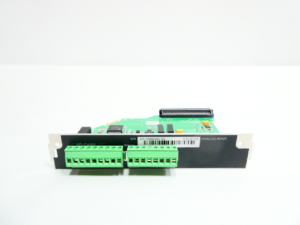
To better understand the position of the SCHNEIDER 140CPU67160 in the market, we can compare it with CPU modules from other manufacturers. For example, let’s consider the Allen-Bradley ControlLogix 1756-L61 and the Siemens S7-400 CPU 416-2.
SCHNEIDER 140CPU67160 vs. Allen-Bradley 1756-L61
- Processor: Both use Pentium processors, but the 1756-L61 has a faster clock speed.
- Memory: The 1756-L61 offers more RAM (2 MB vs. 4 MB), but the 140CPU67160 has Flash memory for program storage.
- Communication: The 1756-L61 supports EtherNet/IP and ControlNet, while the 140CPU67160 supports Modbus and TCP/IP.
- Applications: Both are suitable for complex automation tasks, but the choice may depend on the existing infrastructure and protocol preferences.
SCHNEIDER 140CPU67160 vs. Siemens S7-400 CPU 416-2
- Processor: The S7-400 CPU 416-2 uses a proprietary Siemens processor, while the 140CPU67160 uses a Pentium processor.
- Memory: The S7-400 CPU 416-2 has more integrated memory, but the 140CPU67160’s Flash memory provides additional storage options.
- Communication: The S7-400 supports PROFIBUS and PROFINET, whereas the 140CPU67160 supports Modbus and TCP/IP.
- Applications: Both modules excel in high-performance applications, but the choice often comes down to brand preference and system compatibility.
These comparisons demonstrate that the SCHNEIDER 140CPU67160 holds its own against competitors, offering a unique combination of features that cater to specific automation needs. Its support for multiple communication protocols and its robust performance make it a versatile choice for various industries.
Conclusion
The SCHNEIDER 140CPU67160 is a powerful and reliable CPU module that plays a vital role in industrial automation. Its technical parameters, including a high-speed processor, ample memory, and versatile communication options, make it suitable for a wide range of applications. Industries such as manufacturing, oil and gas, water treatment, and power generation rely on this module to ensure efficient and safe operations. Moreover, when compared to related models and competitors, the 140CPU67160 offers a balanced solution that meets the demands of complex automation tasks.
For more information on the SCHNEIDER 140CPU67160 and other automation products, visit our products page.
Leave a comment
Your email address will not be published. Required fields are marked *